Season 2, Episode 10

Embracing productive beliefs to transform your teaching, starring Mike Flynn

To celebrate this second season of Beyond My Years, Ana is joined by Mike Flynn, nationally recognized expert in mathematics education and online learning. He explains how “disorienting dilemmas” can bolster our productive beliefs and lead to transformative change in our teaching. Mike and Ana also discuss the importance of teacher advocacy, the power of the collective voice, and ways to overcome barriers to change. Our favorite Classroom Insider, Eric Cross, joins Ana to discuss how important it is to challenge our assumptions as we continue to grow and change.

Meet Our Guest(s):

A middle-aged man with short brown hair, glasses, and a maroon shirt smiles at the camera against a dark background—embodying transformative teaching and inspiring others through teacher advocacy.

Mike Flynn

Mike Flynn, CEO of Flynn Education, is a nationally recognized expert in mathematics education and online learning. For 10 years he served as Director of Math Leadership Programs at Mount Holyoke College, where he developed his innovative hybrid learning model. During the pandemic, Mike and his team trained more than 100,000 educators in online teaching best practices.

Before his leadership roles, Mike taught second grade for 14 years and was named Massachusetts Teacher of the Year in 2008. He is the recipient of the National Education Association’s Horace Mann Award for Teaching Excellence and the Presidential Award for Excellence in Mathematics Teaching. Mike is also the author of Beyond Answers: Exploring Mathematical Practices with Young Children.

Meet our host, Ana Torres.

Ana has been an educator for 30 years, working in both the K–8 and higher education sectors. She served as an administrator and instructor at various public and private colleges and universities and as a bilingual and dual language teacher, dual language math and reading interventionist, dual language instructional coach, assistant principal, and principal in K–8 schools. Ana is currently the Senior Biliteracy and Multilingual Product Specialist at Amplify, and delivers literacy and biliteracy presentations across the nation. Ana’s passion and advocacy for biliteracy and support for all students from all walks of life has led her to educate leaders, teachers, and parents about the positive impact of bilingualism and biliteracy in our world.

A woman with long dark hair and hoop earrings smiles at the camera while wearing a black blazer, standing outdoors—ready to discuss classroom challenges or share insights on her teacher podcast.
A man with short, closely-cropped hair and a trimmed beard smiles at the camera against a light gray background, ready to inspire diverse learners in the math classroom.

Meet our Classroom Insider, Eric Cross.

Eric Cross is a middle school science teacher who hopes to someday be a lifelong educator, like the guests on Beyond My Years! In each episode, Eric connects with host Ana Torres to discuss her guests’ best insights, gleaned from their long and rewarding careers in the classroom. Then, Eric talks about bringing some of their wisdom into his current classroom and busy life.

Quotes

“Leadership comes in a lot of different formats, but anyone interested in influencing change can orchestrate experiences to disrupt unproductive beliefs.”

—Mike Flynn

“Teachers who are continually reflecting on their practice and always seeking to improve are the best teachers. They're always evolving, adjusting, reflecting, and paying attention to their kids.”

—Mike Flynn

“Don’t be afraid of your own teacher voice and exercising that. Advocacy is one of the best things you can do.”

—Mike Flynn

“When you look at where you started and where you ended up with a student, with a teacher, with a school, you realize that there's always progress.”

—Mike Flynn

“ Sometimes it gets really hard before it gets better. It just always reminds me to just remember the long game.”

—Mike Flynn

“Change really begins when we look at the unintended consequences of our practice.”

—Mike Flynn

“As a learner, you have to have humility. Otherwise you won't grow.”

—Eric Cross

“If you think you know it all, you're never going to be open to getting new information.”

—Eric Cross

“People don't change just because someone tells them they need to. We change when we experience something that challenges what we used to think and then we have time to reflect on it.”

—Eric Cross
2020 Math Leadership Summit logo with geometric shapes and text; "sponsored by Amplify" appears in orange.

Join us!

Meet like-minded educators Lorem ipsum dolor sit amet, consectetur adipiscing elit, sed do eiusmod tempor incididunt ut magna aliqua.

March 2–4

The US Grant Hotel, San Diego

About the event

Join us for two days of interactive and inspirational talks with math education leaders from around the country to discuss where math education is headed. Meet like-minded K–12 leaders as well as change-makers from major universities, EdTech companies, and professional learning organizations dedicated to improving teacher experiences and student outcomes in mathematics. 

We’re hosting an optional pre-conference workshop featuring Patrick Callahan and Chris Weber on Monday, March 2. The pre-conference starts at 12 p.m.

What to expect:

  • Two full days of keynote and breakout sessions covering a variety of K–12 math topics
  • Sessions led by district leaders sharing their work to raise math achievement
  • Evening networking events
  • Engaging speakers with a variety of expertise
  • Insights you can put to use in your district immediately
Aerial view of a city skyline with tall buildings along a waterfront, under a blue sky with scattered clouds.

Meet a few of our speakers

Use this version when there are multiple presenters.

Jason Zimba

Founding Partner of Student Achievement Partners

Lead writer of the Common Core State Standards for Mathematics

Sunil Singh

Founding Partner of Student Achievement Partners

Lead writer of the Common Core State Standards for Mathematics

Christina Lincoln-Moore

Founding Partner of Student Achievement Partners

Lead writer of the Common Core State Standards for Mathematics

Use this version when there is only one presenter, rather than many.

A woman with curly blonde hair wearing a white blouse is shown next to a book titled "The Knowledge Gap" with a colorful background.

Natalie Wexler

Lorem ipsum dolor sit amet, consectetur adipiscing elit, sed do eiusmod tempor incididunt ut labore et dolore magna aliqua. Quis ipsum suspendisse ultrices gravida dictum fusce. Convallis posuere morbi leo urna molestie. In metus vulputate eu scelerisque felis imperdiet proin fermentum leo.

Lorem ipsum dolor sit amet, consectetur adipiscing elit, sed do eiusmod tempor incididunt ut labore et dolore magna aliqua. Quis ipsum suspendisse ultrices gravida dictum fusce.

Event agenda

Monday, March 2

Arrivals

Pre-conference workshop featuring Chris Weber and Patrick Callahan

Sessions begin at 1 p.m. Pacific and include:

  • Adult and Student Mindsets and Math Supports
  • Enhanced Mathematics

3:00 p.m. Hotel check-in available

6:00 p.m. Welcome reception and dinner

Tuesday, March 3

8:30 a.m. Sessions begin

Sessions include:

  • Math milestones with Jason Zimba
  • Unfinished learning with Phil Daro
  • Powerful moments in math class with Mike Flynn
  • Utilizing math history to embrace equity, failure, and authentic problem-solving in leadership communities with Sunil Singh
  • Radical change in high school mathematics: Addressing wicked problems of tracking, acceleration, and curricular change with Mike Steele

6:30 p.m. Evening event

Wednesday, March 4

8:30 a.m. Sessions begin

Sessions include:

  • Embedding problem-solving into your curriculum with Fawn Nguyen
  • Writing in mathematics: The power of mathematics explanations with Jessica Balli
  • Talk Number 2 Me: Mathematics and mindfulness with Christina Lincoln-Moore
  • Writing in mathematics: The power of mathematical explanations with Patrick Callahan

4:00 p.m. Departures

Submit the form to register for the event!

Note: this is a Hubspot form but, when this page is used, we will be using Gravity forms. I put in an HS form now since the CSS has not been added.

A laptop displays an educational website about balancing forces and floating trains, with a matching teacher's guide booklet beside it.
  • This field is hidden when viewing the form

The fine print

While we’ve made every effort to ensure that this invitation is consistent with the gift and ethics rules adopted by most jurisdictions, we recognize that many public officials are subject to rules that do not permit acceptance of this offer or require approval of other officials at your agency. If you do plan to attend our event, please ensure that acceptance of our invitation is fully compliant with your local rules regarding travel, lodging, and meals for events with vendors. Please let us know if we can provide any additional information to support your determination.

Logotipo de la Cumbre de Liderazgo en Matemáticas 2020, patrocinada por Amplify. Presenta formas geométricas y texto estilizado "2020" sobre un fondo blanco.

Join us!

Meet like-minded educators Lorem ipsum dolor sit amet, consectetur adipiscing elit, sed do eiusmod tempor incididunt ut magna aliqua.

March 2–4

The US Grant Hotel, San Diego

About the event

Join us for two days of interactive and inspirational talks with math education leaders from around the country to discuss where math education is headed. Meet like-minded K–12 leaders as well as change-makers from major universities, EdTech companies, and professional learning organizations dedicated to improving teacher experiences and student outcomes in mathematics. 

We’re hosting an optional pre-conference workshop featuring Patrick Callahan and Chris Weber on Monday, March 2. The pre-conference starts at 12 p.m.

What to expect:

  • Two full days of keynote and breakout sessions covering a variety of K–12 math topics
  • Sessions led by district leaders sharing their work to raise math achievement
  • Evening networking events
  • Engaging speakers with a variety of expertise
  • Insights you can put to use in your district immediately

Meet a few of our speakers

Use this version when there are multiple presenters.

Jason Zimba

Founding Partner of Student Achievement Partners

Lead writer of the Common Core State Standards for Mathematics

Sunil Singh

Founding Partner of Student Achievement Partners

Lead writer of the Common Core State Standards for Mathematics

Christina Lincoln-Moore

Founding Partner of Student Achievement Partners

Lead writer of the Common Core State Standards for Mathematics

Use this version when there is only one presenter, rather than many.

Promotional image featuring an author next to her book titled "the knowledge gap," set against a background of colorful geometric shapes.

Natalie Wexler

Lorem ipsum dolor sit amet, consectetur adipiscing elit, sed do eiusmod tempor incididunt ut labore et dolore magna aliqua. Quis ipsum suspendisse ultrices gravida dictum fusce. Convallis posuere morbi leo urna molestie. In metus vulputate eu scelerisque felis imperdiet proin fermentum leo.

Lorem ipsum dolor sit amet, consectetur adipiscing elit, sed do eiusmod tempor incididunt ut labore et dolore magna aliqua. Quis ipsum suspendisse ultrices gravida dictum fusce.

Event agenda

Monday, March 2

Arrivals

Pre-conference workshop featuring Chris Weber and Patrick Callahan

Sessions begin at 1 p.m. Pacific and include:

  • Adult and Student Mindsets and Math Supports
  • Enhanced Mathematics

3:00 p.m. Hotel check-in available

6:00 p.m. Welcome reception and dinner

Tuesday, March 3

8:30 a.m. Sessions begin

Sessions include:

  • Math milestones with Jason Zimba
  • Unfinished learning with Phil Daro
  • Powerful moments in math class with Mike Flynn
  • Utilizing math history to embrace equity, failure, and authentic problem-solving in leadership communities with Sunil Singh
  • Radical change in high school mathematics: Addressing wicked problems of tracking, acceleration, and curricular change with Mike Steele

6:30 p.m. Evening event

Wednesday, March 4

8:30 a.m. Sessions begin

Sessions include:

  • Embedding problem-solving into your curriculum with Fawn Nguyen
  • Writing in mathematics: The power of mathematics explanations with Jessica Balli
  • Talk Number 2 Me: Mathematics and mindfulness with Christina Lincoln-Moore
  • Writing in mathematics: The power of mathematical explanations with Patrick Callahan

4:00 p.m. Departures

Submit the form to register for the event!

Note: this is a Hubspot form but, when this page is used, we will be using Gravity forms. I put in an HS form now since the CSS has not been added.

  • This field is hidden when viewing the form

The fine print

While we’ve made every effort to ensure that this invitation is consistent with the gift and ethics rules adopted by most jurisdictions, we recognize that many public officials are subject to rules that do not permit acceptance of this offer or require approval of other officials at your agency. If you do plan to attend our event, please ensure that acceptance of our invitation is fully compliant with your local rules regarding travel, lodging, and meals for events with vendors. Please let us know if we can provide any additional information to support your determination.

2025

September 18, 2025

Edutopia: “Using Virtual Manipulatives in Math Class”

Read Full Article

August 19, 2025

Education Week: “Here’s Why It’s Important for Teachers to Have a Say in Curriculum”

Read Full Article

August 18, 2025

Investors Hangout: “Amplify Classroom Revolutionizes K-12 Teaching Experience”

Read Full Article

August 5, 2025

WhaTech: “K-12 Online Education Market Set for Strong Expansion, Reaching $349.77 Billion by 2029”

Read Full Article

August 4, 2025

Education Week: “Districts Using ‘High-Quality’ Reading Curricula Still Supplement With Other Materials. Why?”

Read Full Article

July 9, 2025

K-12 Dive: “Youngest students see big reading gains post-COVID on DIBELS assessment”

Read Full Article

June 25, 2025

The 74: “How Districts in Georgia, Maryland and D.C. Are Raising Reading Proficiency”

Read Full Article

May 28, 2025

Open PR: “K-12 Online Education Market Forecast 2025-2034: Comprehensive Analysis And Growth Opportunities”

Read Full Article

May 27, 2025

District Administration: “Early literacy: How to implement programs that start strong”

Read Full Article

May 20, 2025

EdSource: “California schools prepare to introduce universal reading screening”

Read Full Article

April 23, 2025

The 74: “Eric Adams Expands Reading, Math Curriculum Mandates to All NYC Middle Schools”

Read Full Article

April 21, 2025

Daily News: “NYC expanding reading, math curriculum overhaul to more schools”

Read Full Article

March 19, 2025

Education Next: “School Reinvention in Practice”

Read Full Article

February 28, 2025

K-12 Dive, “Test yourself on this week’s K-12 news”

Read Full Article

February 26, 2025

K-12 Dive: “Only 56% of K-2 students are ready to read”

Read Full Article

January 24, 2025

Chalkbeat Philadelphia: “Two AI-powered charter schools could soon open in Pennsylvania”

Read Full Article

January 16, 2025

Tech & Learning: “What is Polypad and How Can Teachers Use It?”

Read Full Article

2024

December 18, 2024

EdSource: “State takes another step toward mandatory testing for reading difficulties in 2025”

Read Full Article

December 6, 2024

Chalkbeat Philadelphia: “Philadelphia is now spending over $100 million on its curriculum overhaul. Here’s a breakdown.”

Read Full Article

November 27, 2024

Lincoln Journal Star: “Lincoln Public Schools drops a classification rating on statewide assessment”

Read Full Article

November 6, 2024

EdNC: “New K-3 literacy data shows growth in skills for North Carolina students”

Read Full Article

October 1, 2024

The 74: “As NY District Implements Science of Reading, Parents Push for New Focus on Math”

Read Full Article

September 18, 2024

Tech & Learning: “Tech & Learning Announces Winners of Best for Back to School 2024”

Read Full Article

August 22, 2024

Chalkbeat Philadelphia: “Philadelphia school board renews charters, funds tutoring and a new science curriculum”

Read Full Article

August 2, 2024

EdNC: “‘Dedication of our teachers’ praised in an update on the state’s science of reading journey”

Read Full Article

July 31, 2024

The 74: “Classroom Case Study: To Maximize the Impact of Curriculum Mandates, Follow the Science of Reading”

Read Full Article

July 23, 2024

Chalkbeat: “Should teachers customize their lessons or just stick to the ‘script’?”

Read Full Article

July 7, 2024

The Economist: “Will artificial intelligence transform school?”

Read Full Article

June 24, 2024

Chalkbeat: “Math instruction overhaul: NYC unveils new curriculum mandate for middle and high schools”

Read Full Article

June 6, 2024

EdNC: “Perspective | Teachers are the heroes of the literacy story in North Carolina”

Read Full Article

May 24, 2024

The Dallas Morning News: “How Don Quixote changed a Dallas public school classroom”

Read Full Article

May 2, 2024

Akron.com: “Tutoring program at Summit Academy Akron Elementary School attracts national interest”

Read Full Article

April 25, 2024

Edutopia: “Using Tech Tools to Energize Young Students’ Math Learning”

Read Full Article

April 4, 2024

EdNC: “State Board hears update on district ESSER spending, literacy data, and Restart schools”

Read Full Article

March 22, 2024

Thomas B Fordham Institute: “Five takeaways from Ohio’s baseline survey of elementary reading curricula”

Read Full Article

March 15, 2024

The 74: “New Data: Despite K-2 Reading Gains, Students Face a ‘Much Harder Journey’ Ahead”

Read Full Article

March 5, 2024

The 74: “Case Study: How One Texas School District Is Repurposing Staff Development Time to Embrace the Science of Reading”

Read Full Article

February 21, 2024

Times Record News: “UPDATED: Texas Education Commissioner Mike Morath likes what he sees at local school”

Read Full Article

February 19, 2024

Chalkbeat: “Chicago Public Schools recover from pandemic declines more than other districts, study shows”

Read Full Article

February 7, 2024

The 74: “Building Oral Language Skills and Equity Through High-Quality Reading Curriculum”

Read Full Article

2023

December 19, 2023

The 74: “Best Education Articles of 2023: Our 23 Most Important Stories About Students, Schools & Learning Recovery ”

Read Full Article

December 8, 2023

Education Week: “Aligned Science Curriculum, Better Scores? Research Finds a Connection”

Read Full Article

December 6, 2023

WRAL News: “Reading readiness rises in NC’s K-3 classrooms, new data shows”

Read Full Article

November 27, 2023

The Dallas Morning News: “Dallas’ new lessons aim to keep kids on track, but some worry about limiting teachers”

Read Full Article

November 2, 2023

Fort Worth Report: “Black students in Fort Worth ISD still struggle to read at grade level”

Read Full Article

October 31, 2023

Chicago Tribune: “Lake Forest-area schools take stock of state grades; ‘While we celebrate our successes, we acknowledge that the journey … is ongoing’”

Read Full Article

October 19, 2023

Chalkbeat: “NYC eyes middle and high school literacy overhaul. It’s asking families to weigh in.”

Read Full Article

October 16, 2023

The 74: “As Virginia Rolls Out Ambitious Statewide High-Dosage Tutoring Effort This Week, 3 Keys to Success”

Read Full Article

October 6, 2023

Language Magazine: “Embracing Bilingual Assessment”

Read Full Article

September 18, 2023

Tech & Learning: “Best for Back to School 2023”

Read Full Article

September 18, 2023

Chalkbeat: “Chicago Public Schools hired hundreds of tutors with federal COVID money. Can they keep them?”

Read Full Article

September 7, 2023

EdNC: “Perspective | Union County Public Schools empowers educators, elevates readers”

Read Full Article

August 14, 2023

Chicago Parent: “Common Core Math: How to Help Your Kids”

Read Full Article

August 6, 2023

The News & Observer: “NC sees big increase in reading skills among K-3 students. Is the state back on track?”

Read Full Article

August 4, 2023

The 74: “Slow Literacy Gains, Long COVID in Kids: 7 Insights into Pandemic Recovery and Aftermath in U.S. Schools”

Read Full Article

August 3, 2023

EdNC: “State Board of Education: New reading data, parental leave, and a call to support public schools”

Read Full Article

July 28, 2023

Houston Public Media: “New literacy curriculum is among the many changes coming to HISD”

Read Full Article

July 17, 2023

Houston Chronicle: “Mike Miles says HISD schools will teach the ‘science of reading.’ Here’s what that means.”

Read Full Article

July 11, 2023

The 74: “‘Education’s Long COVID’: New Data Shows Recovery Stalled for Most Students”

Read Full Article

July 6, 2023

Houston Chronicle: “HISD superintendent gives voluntary schools one last chance to back out of New Education System”

Read Full Article

June 29, 2023

The Report Card: “Larry Berger on Curriculum”

Read Full Article

June 2, 2023

EdWeek Market Brief:”K-12 Dealmaking: Substitute Teaching Startup Secures $38M; Amplify Raises Undisclosed Series C”

Read Full Article

May 25, 2023

The 74: “Expanding Access to Tutors: Nonprofit Grants $6 Million to 32 Learning Organizations Across 20 States to Help More Students”

Read Full Article

April 21, 2023

The 74: “The ‘Transformation is Real’ as Science of Reading Takes Hold in N.C. Schools”

Read Full Article

April 18, 2023

The 74: “Louisiana District Ravaged by Hurricane & COVID is Bouncing Back with Science”

Read Full Article

April 5, 2023

WFAE: “NC midyear reading data shows gains, but third-grade goals remain elusive”

Read Full Article

April 5, 2023

EdNC: “K-3 students show growth in literacy skills, mid-year DPI data show”

Read Full Article

March 24, 2023

The 74: “COVID & School Recovery: Critics Warn Washington Bill Would Reduce Classroom Learning Time By 4 Hours a Week”

Read Full Article

March 24, 2023

Edutopia: “Using Collective Leadership to Make a Major Shift in Your District”

Read Full Article

March 15, 2023

K-12 Dive: “California at center of latest push for science-based reading approaches”

Read Full Article

March 7, 2023

District Administration: “ESSER pressure: How one district intends to spend wisely as deadline looms”

Read Full Article

March 3, 2023

The 74: “‘The Other Long COVID’ Affecting Kids: Missed Opportunities”

Read Full Article

March 2, 2023

3 WTKR: “More students on track to learn to read in 2022-2023 school year since start of pandemic, researchers say”

Read Full Article

March 2, 2023

ABC 7: “Reading skills rebounding for young students following pandemic disruptions”

Read Full Article

March 1, 2023

K-12 Dive: “By The Numbers: DIBELS testing shows improved reading progress over last two years”

Read Full Article

February 27, 2023

The 74: “Exclusive: Despite K-2 Reading Gains, Results Flat for 3rd Grade ‘COVID Kids’”

Read Full Article

February 27, 2023

Education Week: “Students’ Early Literacy Skills Are Rebounding. See What the Data Show”

Read Full Article

February 7, 2023

The 74: “Using High-Quality Curriculum Doesn’t Mean You Can’t Still Have Fun Learning”

Read Full Article

January 13, 2023

NPR: “Can a middle school class help scientists create a cooler place to play?”

Read Full Article

January 6, 2023

News & Record: “After a numbing low, NC students now heading in ‘right direction’ in reading, math”

Read Full Article

January 5, 2023

CBS17.com: “K-3 students in NC make significant strides on literacy exams, DPI says”

Read Full Article

2022

December 20, 2022

District Administration: “Literacy Under the Lights: 10 ways to bring the community back together”

Read Full Article

December 14, 2022

The 74: “14 Charts This Year That Helped Us Better Understand Covid’s Impact On Students Teachers and Schools”

Read Full Article

December 14, 2022

The 74: “Learning Loss Is Worse than NAEP Showed. Middle School Math Must Be the Priority”

Read Full Article

November 21, 2022

Voicebot.ai: “SoapBox Labs Brings Child-Centered Voice AI to Dyslexia Detection Assessment”

Read Full Article

October 24, 2022

Education Week: “Two Decades of Progress, Nearly Gone: National Math, Reading Scores Hit Historic Lows”

Read Full Article

October 20, 2022

The 74: “Exclusive Literacy Data: Small Gains Since Last Fall, But No Reading Rebound”

Read Full Article

August 30, 2022

The 74: “Test English Learners in the Languages They Speak at School and at Home”

Read Full Article

August 29, 2022

WTKR TV NC: “News 3 investigates childhood literacy rates, raising money to give books to local kids for new school year”

Read Full Article

August 28, 2022

EdNC: “Elementary students made growth last year in skills that lead to reading proficiency, new data show”

Read Full Article

August 18, 2022

SHRM Blog: “The Great Resignation Skipped Us. Here’s why.”

Read Full Article

August 16, 2022

Forbes: “Curious About Knowledge-Building Curricula? Check Out This Website”

Read Full Article

July 20, 2022

District Administration: “Out-of-school STEM learning is much more powerful when it’s inclusive”

Read Full Article

July 19, 2022

Chalkbeat: “The state of learning loss: 7 takeaways from the latest data”

Read Full Article

June 28, 2022

The Preschool Podcast: “Early literacy strategies that stick with Darryl from Run-DMC and Makeda from Nickelodeon [Podcast]”

Listen To The Podcast

May 24, 2022

Forbes: “States That Want To Boost Literacy Should Keep An Eye On Texas”

Read Full Article

April 24, 2022

Business Ecosystem Alliance: “Ecosystems in Education–Collaborating to Efficiently Serve the End User”

Watch Full Video

April 18, 2022

KQED Mind Shift: “Weighing the best strategies for reading intervention”

Read Full Article

April 15, 2022

Fordham Institute: “Assessing a standards-aligned physical science curriculum”

Read Full Article

March 23, 2022

The Baltimore Sun: “National test scores show student gains from in-person learning in all but a critical group: new and pre-readers | COMMENTARY”

Read Full Article

March 15, 2022

NPR: “Two years ago schools shut down around the world. These are the biggest impacts”

Read Full Article

March 11, 2022

The Hub – Dallas ISD: “Students at Greiner and Anson Jones Elementary find success in reading and writing with a new program”

Read Full Article

March 10, 2022

NY Daily News: “Read it and weep: The new reading instruction emergency”

Read Full Article

March 10, 2022

WISH TV Indianapolis: “Study shows student performance plummeted during pandemic”

Read Full Article

March 9, 2022

New York Post: “Young students have suffered ‘alarming’ drops in reading skills during pandemic”

Read Full Article

March 9, 2022

The Daily Caller: “Childhood Literacy Plummeted Following Pandemic Shutdowns, Studies Show”

Read Full Article

March 8, 2022

The New York Times: “It’s ‘Alarming’: Children Are Severely Behind in Reading”

Read Full Article

March 7, 2022

Education Next: “The Education Exchange: Pandemic Hurt Younger Students’ Learning Worse, Amplify Data Suggest”

Listen to the Podcast

February 28, 2022

The 74: “Our 12 Best Education Articles in February: Reflections on 700 Days of COVID Chaos, Setting a Bar for Unmasking in Schools, Burying Schools in Record Requests & More”

Read Full Article

February 24, 2022

The Daily Advertiser: “Reading scores improve slightly, but pre-COVID reading levels are ‘the wrong goal’”

Read Full Article

February 24, 2022

Wall Street Journal: “The School Shutdowns and Lost Literacy”

Read Full Article

February 23, 2022

K-12 Dive: “DIBELS data illustrates pandemic reading setbacks”

Read Full Article

February 22, 2022

ABC 7 Buffalo: “Children falling behind in reading”

Read Full Article

February 18, 2022

The Carolina Journal: “Report: Elementary students lag in literacy due to pandemic”

Read Full Article

February 16, 2022

The 74: “‘We Have First-Graders Who Can’t Sing the Alphabet Song’: Pandemic Continues to Push Young Readers Off Track, New Data Shows”

Read Full Article

February 16, 2022

Education Week: “More Than 1 in 3 Children Who Started School in the Pandemic Need ‘Intensive’ Reading Help”

Read Full Article

February 4, 2022

Literary Hub: “EXCLUSIVE: Watch Joshua Bennett Discuss A.R. Ammons’s poem “Cascadilla Falls”

Read Full Article

January 26, 2022

The Ross Kaminsky Show: “Susan Lambert and the Literacy Gap”

Listen to the podcast

January 19, 2022

K-12 Dive: “Report: Colorado reading law update boosts quality of literacy curriculum”

Read Full Article

2021

December 15, 2021

Chalkbeat: “How Denver plans to address a drop in early elementary reading scores”

Read full article

December 8, 2021

The SHRM Blog: “What’s the Best Work Perk of All? Contributing to the Social Good”

Read full article

November 13, 2021

Hechinger Report: ‘The Reading Year’: First grade is critical for reading skills, but kids coming from disrupted kindergarten experiences are way behind”

Read full article

October 20, 2021

Hechinger Report: “OPINION: Younger students were among those most hurt during the pandemic”

Read full article

September 2, 2021

EdSurge: “An Edtech User’s Glossary to Speech Recognition and AI in the Classroom”

Read full article

September, 2021

SIIA Education: “ED TECH SUCCESS STORIES”

Read full article

August 23, 2021

CNN: “Irish tech firm helps kids’ voices be heard”

Read full article

August 18, 2021

SoapBox Labs: “Can Speech Recognition Help Children Learn to Read?”

Read full article

August 12, 2021

FOX Chicago Broadcast Interview: “Pandemic widens literacy gap for students”

Read full article

August 3, 2021

T.H.E Journal: “More Students of Color at Risk in Reading After Pandemic”

Read full article

July 28, 2021

The 74: “Early Reading Skills See a Rebound From In-Person Learning, But Racial Gaps Have Grown Wider, Tests Show”

Read full article

July 28, 2021

K-12 Dive: “Reports: Math, reading progress slowed during first full school year of pandemic”

Read full article

July 20, 2021

EdNC: “The mCLASS reading assessment tool is back in North Carolina classrooms, but it’s going to look different”

Read full article

July 5, 2021

WBAL: “Baltimore students from all socio-economic backgrounds get a chance to ‘Amplify’ their learning skills”

Read full article

June 15, 2021

Language Magazine: “Using Evidence to Overcome Adversity”

Read full article

May 7, 2021

The Dallas Morning News: “How can a one-minute kindergarten test help teachers tackle the ‘COVID slide’?”

Read full article

April 20, 2021

Education Week: “How Teachers and Curriculum Will Shape Ed Tech’s Future: A CEO Makes the Case”

Read full article

March 24, 2021

The Hechinger Report: “OPINION: Children will need summer tutors to make up for pandemic learning loss”

Read full article

March 23, 2021

Education Week: “Most States Fail to Measure Teachers’ Knowledge of the ‘Science of Reading,’ Report Says”

Read full article

March 17, 2021

Axios: “How online education and tutoring could fight COVID learning loss”

Read full article

March 16, 2021

USA Today: “Students are struggling to read behind masks and screens during COVID-19, but ‘expectations are no different’”

Read full article

March 16, 2021

The 74: “Schools and COVID, a Year Later: 12 Months After Classrooms Closed, 12 Key Things We’ve Learned About How the Pandemic Disrupted Student Learning”

Read full article

February 25, 2021

K–12 Dive: “Reading gaps widen in mid-year data, especially for K-1 students of color”

Read full article

February 24, 2021

The 74: “One Year into Pandemic, Far Fewer Young Students are on Target to Learn How to Read, Tests Show”

Read full article

February 17, 2021

NBC Los Angeles: “Local Students Design Rovers in Mission to Mars Student Challenge”

Read full article

February 5, 2021

District Administration: “To save literacy, focus first on high-quality core instruction”

Read full article

February 4, 2021

The Hechinger Report: “5 ways schools hope to fight Covid-19 learning loss”

Read full article

January 5, 2021

The 74: “Science Matters Now More than Ever. The Time to Start Teaching It Is in Elementary School”

Read full article

2020

December 15, 2020

Education Week: “Students’ Reading Losses Could Strain Schools’ Capacity to Help Them Catch Up”

Read full article

December 9, 2020

Education Post: “How to Help Beginning Readers During the Pandemic”

Read full article

December 3, 2020

American Consortium for Equity in Education: “The Importance of Quality Curriculum With Industry Voice”

Read full article

September 29, 2020

The 74: “Beyond the Scantron: Ed Tech CEO Larry Berger on Why the Pandemic Is No Excuse to Abscond Accountability and ‘Disruptions Are Great Opportunities to Try Something New’”

Read full article

May 25, 2020

The 74: “Class Disrupted Podcast Episode 2: Why Is My Child Doing So Many Worksheets Right Now?”

Read full article

February 5, 2020

Getting Smart Podcast: “Larry Berger on EdTech Past and Future”

Read full article

S1-04: Connecting with students and caregivers in the science classroom: Ryan Rudkin

Promotional graphic for "science connections", season 1, episode 4, featuring a smiling woman named Ryan Rudkin, themed with science illustrations like atoms and a globe, highlighting how to engage students

In this special episode, our host Eric Cross sits down with veteran middle school teacher Ryan Rudkin. Ryan shares her expertise after almost two decades in the classroom, discussing ways to incorporate aspects of problem-based learning into the K–8 science classroom. Eric and Ryan talk about how to increase parent engagement, involve community members, and add excitement to lessons.

Explore more from Science Connections by visiting our main page.

Download Transcript

Ryan Renee Rudkin (00:00):

I know there’s other goals in mind, you know, standards and test scores. But at the end of the day, I wanna come back and I want them to come back.

Eric Cross (00:35):

My name’s Eric Cross, host of our science podcast, and I am with Ryan Rudkin, middle-school teacher out here in California just to the north up near Sacramento? El Dorado Hills?

Ryan Renee Rudkin (00:46):

Yeah. 20 miles east of Sacramento.

Eric Cross (00:49):

Nice. And I am down here in San Diego. And so Ryan, to start off, what I wanna do is ask you about your origin story, like a superhero. So how did you become a middle-school science teacher to become part of this elite profession of science folks that get to do awesome things with kids?

Ryan Renee Rudkin (01:08):

I would agree with you that it is definitely an elite profession. I got my credential and I thought I was gonna teach third or fourth grade elementary school. And the second day I got called for a sub job for middle school. And I just thought, “We’ll take it,” you know? And by second period, I knew: This is where I belong. The kids, middle school, students are just a species of their own. And you have to appreciate them. And if you do appreciate them, then you’re in the right spot. And I quickly looked at my coursework and I was able to get authorizations in science, history, and English, and I love science. So I chose science. And the rest is history. It’s been a wild ride and I wouldn’t have changed or asked for anything different. I love it.

Eric Cross (02:02):

I definitely agree with you. So, your history—you’ve been in various middle-school classrooms. Can you tell us a little bit about that? What classrooms have you been in? What disciplines of science have you taught or are currently teaching?

Ryan Renee Rudkin (02:14):

I was hired for seventh grade life science, and then I did that for a few years and then I got moved into eighth physical science, and I was there for 12 years. Love eighth grade science. I love eighth graders. Chemistry and physics are my favorite. There’s just so much opportunity for just awesome labs, great conversations, student discourse, all of that. And then the past three years I’ve been in sixth grade and now we’re integrated. So,a sixth grade integrated science and I also teach social studies and a technology design class.

Eric Cross (02:52):

Oh, nice. What do you do in your technology design class? That sounds cool.

Ryan Renee Rudkin (02:56):

Right now it’s mostly internet media and we use WeVideo, it’s an editing-video program, and we produce and put on our school weekly news bulletin. And then we weave in other projects. We do some interdisciplinary projects. Right now my students are working on a mythology God, Goddess, and Monster project that relates to our social studies curriculum. And we’re learning about Greece. So yeah, we just try to give them added projects and they’re using the WeVideo platform. By sixth grade, they’re coming to us now with wonderful skills with all the tech. I mean, if I need help, I ask them like, “How do you do something on Google Docs?” Or, “How do you do something on Drive?” The kids are definitely tech-savvy.

Eric Cross (03:49):

They must love being the teacher in the classroom. They get to—it kind of switches power roles, where they get to teach the teacher something.

Ryan Renee Rudkin (03:56):

Yes. And especially WeVideo, sometimes we’ve had some hiccups, and the kids show everybody, and that’s part of the design class. They’re trying to solve—we’re teaching them how to solve their own problems. So if there’s any kind of issue with anything with the technology, honestly, I usually tell them, “Go ask a friend,” or we kind of shout out, “Hey, who knows how to troubleshoot this?” And the kids are eager to help each other, which is nice.

Eric Cross (04:21):

And they have this authentic experience where they’re actually doing real problem-solving, as opposed to something that we manufactured. Like, those are real things that we have to deal with in life. And that’s exactly like how we solve it, right? We just go ask people! We look it up, and the ahas are genuine too. Throughout!

Ryan Renee Rudkin (04:36):

Yes, especially thinking on the fly. Especially yesterday, I was in the middle of teaching and my laptop froze, and it’s like, “OK, everybodytake a couple minutes, you know, work on this, this, or that while I switch out laptops!” And so I’m modeling, too, how to solve my own problems. And I think it teaches the kids how to do that too.

Eric Cross (04:59):

I’ve always thought it was interesting that when teachers get to teach in real time, how do we handle stress and frustration when it’s really happening? And I think the tech—at times, failure is the real one where you feel this chill or this sweat that kind of comes over you and you’re trying to present or cast or the video won’t play and things like that. I think I’ve done enough times in my years of teaching where now my students know what to do, or they want to come up and help, and we’re good with it. But I remember in the beginning when those things would kind of glitch or go wrong or the wifi goes down, and you’re like, OK, what do we need now?

Ryan Renee Rudkin (05:33):

I think it’s honestly, after the fact, when I think in the moment, I’m not thinking of feeling stressed, but just afterwards, then I’m like, “Oh my gosh, this has just been a wild day.” But yeah, you just have to kind of go with it. And that’s just the beast of middle school. I just added to the list of why we love it.

Eric Cross (05:53):

You said something about interdisciplinary work, and I wanna kind of ask about that. Because it sounds like you’ve had your hand in several different areas of science and grade levels. Working, doing design courses, working with tech. Are there certain lessons that are your favorites to teach? The ones that you really enjoy, or that no matter what, you’re like, “We need to do this; this is such a rich experience for students”?

Ryan Renee Rudkin (06:17):

Yeah. I definitely try to do lessons or activities along the way. I like to do projects at the end of my units. When I taught physics, we did a project and it was mainly an assessment tool called the Wheeling and Dealing. The kids, they would all get a different car. And then they to sell their car. And so they had to pretend to be a car salesman, and they did that with their knowledge of the physics unit. So everything we did on forces and speed and motion. So I like doing culminating projects like that. And you’re kind of tricking them into assessing them.

Eric Cross (06:57):

When I think about your car salesman project, I’m thinking of a bunch of students, but they’re like on Shark Tank, but they’re just littler versions. And they’re doing these sales pitches, but they’re speaking in scientific terms as they’re trying to do it. Do you record these or do they just exist in the classroom?

Ryan Renee Rudkin (07:12):

No…And that was a long time ago, when I taught eighth grade. I wish I had; I wish I had recorded. That was definitely—it was fun, ’cause the kids, they would get their little piece of paper and they—some of ’em didn’t know what car it was. And so they’re like “A Boo… A Boo-gatti? What’s a Boo-gatti?” And then someone from across the room would be like, “Ooh, I want it! Here, I’ll trade you my Ford Focus!” And <laugh> so they would kind of wheel-and-deal which car they would…and then once they got their choice, then they would do the project.

Eric Cross (07:44):

So they’re really embodying this persona of a car salesman. The wheeling and doing back-and-forth and trying to trade a Bugatti for a Ford Focus. <Laugh>

Ryan Renee Rudkin (07:53):

I know. <Laugh> I like to make my class, my learning environment, enjoyable. You know, I gotta be there; they gotta be there. So I know there’s other goals in mind—you know, standards and test scores—but at the end of the day, I wanna come back, and I want them to come back. And I just have that as a priority.

Eric Cross (08:18):

Well, based on the projects that you’re doing and the way that you approach education with students, I can see why middle-school students would want to come back, even if they had the option not to. Just because of the cool things that you’re doing. Now we’re on this—hopefully, fingers crossed—tail end of COVID in the classroom and schools, and I know it’s impacted all of us differently. Has student engagement changed since COVID and if so, how, and what have you done in these last two years to maybe adjust your approach, to continue that engagement and that richness that you provide for your kids?

Ryan Renee Rudkin (08:57):

I definitely—I think for me, I recognize that when the students are in my classroom, I want them to, I dunno, for lack of a better word, just escape the noise at home. And I know we’ve always had students that are going through divorce situations or their dog died, other things, but I think with COVID, it’s definitely been compounded. And just creating a safe place for the kids to want to be and…it’s hard. We’ve had a lot of students that have been out, absent, for various reasons and on quarantine. And they’re struggling with doing work from home, ’cause their parents are stressed and their parents are dealing with their work issues. And so I think just having grace for the kids and just keeping…I don’t know, I guess like I said, I’ve always had student engagement as top of my list.

Eric Cross (10:06):

It sounds like—the things I hear you say really have to do with who these students are as people.

Ryan Renee Rudkin (10:12):

Yeah.

Eric Cross (10:13):

And then as a second, who they are as students. How do relationships fit into your engagement? ‘Cause I’m hearing this connection that you seem to be making with kids as you’re talking about things that are beyond academics: their home life, how they’re impacted.

Ryan Renee Rudkin (10:28):

Yes.

Eric Cross (10:28):

Is there anything that you do to build these relationships, or to connect with your students, to make them feel wanted or feel connected to the classroom or to you?

Ryan Renee Rudkin (10:37):

Yeah, I do. I do a few things to build those connections. And again, this timeframe in their life is so out of their control, their peer relationships, relationships with their parents. And when they’re in my classroom, I want them to feel loved and appreciated. Something I do it’s called Phone Fridays. And in one of the social media groups, someone posted about it, and I’ve been doing it for over a year now, actually. So on Fridays I call parents and give good news. And so I’ll pick maybe one or two students. And it could be academic reasons. It could be behavior, I’ve seen a slight improvement of behavior. Maybe a role model in the classroom. And my goal is to get everybody every trimester. So everybody gets a phone call by the end of the trimester. And it’s funny ’cause sometimes the parents are a little like “Uh-oh”! When they pick up, they see the caller ID, and their school’s calling. ‘Cause Some kids don’t get good calls. So it’s a really—I would say every single parent that I’ve called, I usually get a follow-up email, either to me or my admin, just saying it’s such a cool idea I do this; thank you so much. And yeah, I just call and give good news and just put ’em on the spot. And usually the kids are a little embarrassed, but you can tell, even though they’re kind of—I think they’re faking it, that they’re embarrassed! ‘Cause You know that they got the Phone Friday, and everybody’s like, “Who’s gonna get the phone Friday?!” And so it’s a very big deal in my class.

Eric Cross (12:07):

What a great way to—I mean, it seems like that hits on so many levels. You’re making these positive calls home. You’re praising publicly, which a lot of times can happen where students can get criticized or redirected publicly and then praised privately, which is a lot of times the reverse what we should be doing. But here you are praising them publicly. And then you’re not only building a relationship with yourself, but you’re also connecting them with their parent or whoever is caring for them, because now when they go home, there’s this, “Hey, your teacher called; you’re doing awesome!” So it’s this kind of triangle that’s forming there. I think that’s super-cool and a great thing for teachers to do.

Ryan Renee Rudkin (12:45):

It takes, you know, the last five minutes of my class. I do it every class. And then I have a system. Like I said, I keep track of all the kids. That way, by the end of the trimester I’ve gotten everybody. Sometimes I let the students, whoever I call first, then I let them pick a peer and I tell them, “OK, we have to have a solid reason. Why are we calling?” And a couple times they’ll have a student, like one of my energized ones, they’ll raise their hand. “How About me? How about me?” And I and the kids kind of laugh a little and I said, “Well, how about this? Let’s make a goal. How about next week we’re gonna make a goal and we’re gonna have a reason to call home.” So just working on the kids that need a little push in the right direction. That’s other reasoning to it. But yeah, it’s fun. I love it.

Eric Cross (13:33):

And you have the community. You have this goal setting. We were talking a little earlier about this transition—so you’re becoming this…your school’s going through the IB process, is that right?

Ryan Renee Rudkin (13:44):

Yes.

Eric Cross (13:44):

And we were talking about the ATL skills and one of them is goal-setting management. You already kind of organically do this in your classroom, which is really neat. I know being an IB teacher, a lot of times I find the things that I’ve already been doing and find, “Oh, this is actually an approach to learning!” or “This is something that has a title!” I just thought it was just being helpful! Ah…So the kids are connected. You have this process where you’re calling parents; it’s working; students are involved, so it’s building this community. Now you’re engaging students. Do you have any favorite student engagement tools that you use in your classroom or when you’re teaching that you feel like you get a lot of bang for your buck? There’s so many things out there these days. And so many approaches, tools, web apps. Do you have any favorites that you use?

Ryan Renee Rudkin (14:40):

No. Nothing comes up top of my mind right now. Mostly just projects, like I said. And being excited. I think having my students see me excited about something…and I’m honest when we’re doing something that’s not quite my favorite, then I’m honest about that too. But just having my—like, we just started thermal energy this week and I told my students, I said, “OK guys, I’m gonna weave in some chemistry in there. I’m gonna weave in some particle motion,” and they’re like, “Oh! That’s when you taught eighth grade, huh!” Cause I talk a lot about when I taught eighth grade before. I don’t know, just showing my own enthusiasm, I think, is a good payoff to me. That’s a bang for your buck. Other things…I try to give ’em cool videos and Mark Grober, he’s definitely a favorite of mine I like to show my students. I like to bring in guest speakers from our community. When I taught eighth grade for physics, I always brought in a local CHP officer and they would bring in the radar and lidar guns and the kids would mark off the parking lot and they would calculate their speed. And then they would verify it with the radar gun. Two years ago when I taught math, I brought in a local landscaper company, a father-and-son outfit, and they showed the kids how they would do bids on jobs. And so, relate it to our chapter on volume and area. So just making that connection with real life. Plus it’s just a nice opportunity, too, for the community to come in. With our design class, put on our newscast. And then one of our units in our sixth grade curriculum is weather. And so I brought in a local weatheruh, chief meteorologist. And he actually talked to the students about his job as a meteorologist and then also being on the news and putting on a newscast. So we got him on our green screen and did a little like Mark Finan, you know, little cameo on our newscast for the week for school. So that was kind of cool.

Eric Cross (16:45):

They must have been excited.

Ryan Renee Rudkin (16:47):

Yeah. They’re pretty starstruck by him. So that was pretty fun.

Eric Cross (16:51):

This person was on their local news? So they would know him?

Ryan Renee Rudkin (16:56):

Yeah, he’s on Channel 3 out of Sacramento. Yeah. KCRA Channel 3, Mark Finan.

Eric Cross (17:00):

So all these guest speakers that you have…how do you reach out to these people? And you sound like you get a lot of success. Do you ever get nos? Like if I’m sitting here listening and that inspires me, but you’re getting celebrities and you see a few people…like, how do you reach out to them? And does everybody say yes? How does it go?

Ryan Renee Rudkin (17:21):

Well, usually at my back-to-school night, I always ask the parents if they have a career or hobby that could lend itself to the curriculum. And so sometimes I’ll hear about—students will talk about, like, “My mom’s a doctor.” And so I’ll reach out to parents and just say, “Hey, you know, your kiddo said, you’re a doctor. May I ask what type?” And most of the time the nos that I’ve received are just because of schedule conflicts. You just have to get creative! Look in your community and see what you have. People want to come and talk to kids. I’ve had some presentations that the person is so intelligent and amazing, but they just, weren’t very kid-friendly. I mean, that happens. Butsomeone knows someone. And just ask! I mean, it doesn’t hurt to ask to have ’em come out, come hang out for the day, with my students. Andone time I had a nurse practitioner she was in the cardiac unit. And so she brought in hearts and led a heart dissection with my students. And we did a station set-up. I’ve had elaborate ones like that, or just a mom come in to tell my students about her job as a nutritionist and relate it to our unit on metabolism. And so just did like a little 15-minute Q&A with the kids on nutrition. And I would just say, look at your community and/or post on social media. I always do that. Post in your school’s PTA groups. So the parents know someone, that’s for sure. Or someone’s retired. One time I had—I think he was a grandfather of one of the kids—he was into rocks. And he had a bunch of meteorites <laugh> and brought in his meteorites.

Eric Cross (19:15):

Bring in your rocks!

Ryan Renee Rudkin (19:15):

I know! Right? And he <laugh> just brought in his meteorite collection! I was like, sure, come on in!

Eric Cross (19:23):

That’s one of the things I love about being a middle-school teacher is that my students have such varied interests and I’ll get the Rock Kid every once in a while and he’ll come in and he’ll have all these rocks and crystals. And a lot of times there’s a grandfather that’s responsible for this inherited geologic treasure that they have.

Ryan Renee Rudkin (19:45):

Yeah, something like that—I mean rocks are not my favorites, but I don’t really tell the kids that. I was like, “Sure, yeah, come on in! We can have a whole-day lesson on rocks!”

Eric Cross (19:55):

<Weakly> “This is great!”

Ryan Renee Rudkin (19:58):

Just utilizing your resources. That’s all it’s about.

Eric Cross (20:02):

Well, I think the back-to-school night was really helpful. That’s something that’s super doable. You have a bunch of parents and you just simply ask, “Who do you know? What do you do?” And then just collecting that and then just asking people to come in. I’ve I’ve been reluctant to do it more often than I’ve wanted to, because I haven’t figured out—and maybe you can help me with this—I have three class periods a day plus other class periods that are not necessarily science. And I don’t want to dominate a person’s schedule. Do they tend to be willing to stay all day? Or do you do, one class gets it, and you record it? Like, how do you balance out the speakers with your school schedule?

Ryan Renee Rudkin (20:39):

Mostly they’ll they’ll just come for the whole day. When I taught eighth grade, I had five classes, so that was easy. That was an all-day thing. And then usually I’ll offer to call lunch, have lunch delivered, or snacks during the day. I mean—

Eric Cross (20:53):

Feeding them is key.

Ryan Renee Rudkin (20:54):

Yeah. Just something kind of nice. Donuts in the morning. I mean, you’d be very surprised. Most people that are in the field or retired, like I said, they’re more than willing to come. And even if they have to wait an hour, while you teach another class that doesn’t pertain to it, then they’ll either leave or come back or just hang out in the back and pretend to be a student during that history class that you have.

Eric Cross (21:20):

It’s my own limiting belief where I feel guilty. I don’t think about it. I need to think about it through the perspective that you do, that these people WANT to talk. I just assume everybody’s so busy. But I do know, the times I’ve had speakers come out, at the end of the day, they’re so energized or they’re so happy or they’re so grateful. ‘Cause They’re like, “This is what it’s like to teach every day?” I’m like, “Yeah, this is what it’s like.”

Ryan Renee Rudkin (21:42):

I think too, a lot of parents…usually being being in the stops at elementary. A Lot of parents don’t get the opportunity to come help out in the classroom, because the middle school kids, you know, it’s not very cool or it’s just not needed like in the elementary classes. So a lot of times, like I said, you’d be surprised. A lot of the parents they’re more than happy to come and hang out. And again, some students, they don’t want their mom or dad to be there, but then I talk it up. I’m like, “Everyone’s gonna be so like impressed that your dad’s a doctor,” or “your mom’s a doctor” or —so then I kind of like downplay it. Like, “Oh, whatever, you’re you’re faking it. It’ll be fine. Don’t be embarrassed.” Leading up to their parent coming into the classroom.

Eric Cross (22:36):

Right. Kind of redirect that energy toward something positive. With guest speakers, projects, pacing, all these awesome things that you have going on, how do you find balance as a teacher, as a person? And what encouragement would you give to new or aspiring teachers? We work in a profession that will take as much as you give it. And you fall asleep at night worrying about other people’s kids and we love it. And teachers by personality can just give and give and give and give. But in order for us to last—I’m thinking about those new teachers who are going into it, who are gonna go in and be there before the sun gets up and stay after the sun gets down. How do you maintain balance, taking care of yourself? You’ve been in education for—how long have you been teaching for?

Ryan Renee Rudkin (23:29):

Sixteen. This is my 16th year.

Eric Cross (23:31):

Enough to be that veteran. So how do you find balance? And then, what encouragement would you give to new or aspiring teachers?

Ryan Renee Rudkin (23:39):

I would say each year, pick one or two things to add on. You can’t add on 10 things, even though you’re gonna find 10 things that are awesome. But just make a little list, put ’em in a file, and every year, just get good at what you do and then just add on one or two things. And reflect on what’s not going well that you can get rid of to make room to add something else. Try to be patient with yourself. And don’t reinvent the wheel. There’s so many things out there that you can borrow and make it your own. Again, I think that’s a time-saver, just leaning on your colleagues. And take lots of notes, because then when you do it again next year, you can refresh yourself and, “Oh yeah, this lesson, wasn’t the best…” What can you add in to make it a little bit better? And yeah, I would say just take on one or two things each year. And then by the time you get to, you know, being a veteran, you can do all these awesome things and it’ll feel natural ’cause you’ve been practicing and just adding in one thing at a time. I coached Science Olympiad a bunch of years ago, and Science Olympiad is so rewarding. It’s just so amazing.

Eric Cross (24:59):

What is Science Olympiad, for the people who’ve never heard of it?

Ryan Renee Rudkin (25:03):

Oh, Science Olympiad is so awesome. Google it. I think it’s just ScienceOlympiad.org. It’s 23 different events across all disciplines of science, different topics. And then you have a team of 15 students. And so your 15 students have to cover the 23 events. So for example, if the student’s on the anatomy team, usually there’s a team of two kids they’re gonna study and learn. They provide all the rules and the guidelines. So the students learn and study whatever the parameters are for that year. And then they take a test. And then they compete against other schools. And there’s build events, the engineering events, they can build things like trebuchets matchbox cars or mousetrap cars. Oh gosh, there’s all kinds of things. There’s like a Rube Goldberg device. It changes every year. And it’s so rewarding to see the kids; they pick their area of science that they love. And sometimes you have to put them on an event that they don’t know, and then they end up loving it. It’s so rewarding as a teacher to see these kids that are just on fire and you know that one day they’re gonna go off and do amazing things. They just commit. They commit to their event. And then they blow it outta the water and they win medals and just the recognition…it’s super, it’s just an amazing program.

Eric Cross (26:42):

One of the competitions that’s really low-tech that I’ve taken into my classroom is Write It, Do It. Have you done that one before?

Ryan Renee Rudkin (26:50):

Oh, yes. Yeah. That’s one. Yep.

Eric Cross (26:52):

It’s such a low-tech, simple one to do, but it teaches such great skills. And for those people who haven’t heard of the Write It, Do It project, you create kinda some abstract art out of random crafts. That’s very difficult to describe. You have pipe cleaners and foam and balls and you know, all these different things. And you make it. And then one person on the team is the writer, and they look at it and they write the procedures, and then their teammate, who’s in a different room and doesn’t get to see it, gets all the materials to build it and the procedures, and they have to rebuild it as closely as possible to the actual original. Even though they don’t get to see the original. So they have to rely on their partner’s ability to write procedures step-by-step. And it was fun to watch my students become teammates in that. And they learned how to communicate in a really fun competition. So I expanded it to do it with all of my students as an activity, just to teach them how write descriptively, to write procedurally, to be technical writers. And it’s, it’s fun! It’s fun to see what they build based on what the students say. <Laugh> And it’s also fun to watch them interact with each other, which for seventh graders, usually it’s conflict. <Laugh> But, like, playful conflict. <Laugh> It’s pretty funny to see what they build.

Ryan Renee Rudkin (28:11):

They’re like, “Man, what are you talking about? That doesn’t mean this; it means this!”

Eric Cross (28:16):

<Laugh> I know part of me feels guilty, but not enough to stop the project. ‘Cause I know for some of ’em, it’s gonna be a really trial by fire being able to practice their skills with writing procedures.

Ryan Renee Rudkin (28:27):

But they’re learning among themselves how to provide more details and to be more thorough with their writing and and their thoughts, put their thoughts onto paper. So yeah, that’s a funny event. Definitely.

Eric Cross (28:41):

Earlier you had mentioned something about connecting your kids with kids and students outside of your classroom. What is it that you do with that? Because I thought that was a really cool project. Can you speak to that a little bit?

Ryan Renee Rudkin (28:57):

Yes, I’ve done—they haven’t had it in a few years, but there’s something called the Pringles Challenge. And if you Google that, I’m sure it’s on the Internet still. So you sign your class up, or your classes, and you get partnered with another school somewhere in the U.S., someplace else. And you decide individually teams, whatever they build. And they make a package to ship a single Pringle chip through the mail. And then you actually mail a Pringle chip through the mail. And then your partner team or partner school, they send their chips to you and then you open everything and then you can take pictures and video. And then there was a whole scoring process where you would score when you receive the chips. And then you input all the data on the website so you can see like how your—and most schools would trade pictures, so that the kids found out how their chip survived. March Mammal Madness is so much fun. Again, Google that.

Eric Cross (30:01):

Did you say March Mammal Madness?

Ryan Renee Rudkin (30:02):

Yes.

Eric Cross (30:03):

Like March Madness, with mammals?

Ryan Renee Rudkin (30:05):

Yes.

Eric Cross (30:05):

  1. What is this?

Ryan Renee Rudkin (30:06):

It starts up in March. And you can sign your students up. And that one—it’s not too interactive with other schools, but this is opportunity to get the kids interacting within your site or within your district. Or if you have teacher friends at other schools. There’s like 60…I think it’s 64 animals? And they have this massive bracket that they post. And then you can have the students, I did it—it would be very time-consuming to have the kids individually research each animal. So I just gave one animal per student and so as a class we researched all the animals and then, I think it’s every three days or so, they have these bouts. And it’s all posted on YouTube. Google it. It’s kind of fun.

Eric Cross (30:56):

I’ve already got the website up, ready to go! Folks, everybody who needs to Google this: <articulates carefully> March Mammal Madness. And is it Arizona State University? Is that the main site, ASU?

Ryan Renee Rudkin (31:04):

Yes.

Eric Cross (31:04):

So people, listen to this. Check it out. March Mammal Madness. Look, I’m doing this! I’m already,—you’ve already sold me on this.

Ryan Renee Rudkin (31:14):

It is so much fun, oh my gosh. And then, then the kids—each round, they pick their pick, just like basketball. They do their picks and then you wait for the video. And they do it live on—I think it’s live on Instagram, or the next day on YouTube. And then the kids get all excited. And then usually the kids, whatever animal they got as their research animal, they’re rooting for that one to win, the whole thing.

Eric Cross (31:42):

But we still have time; we still have time to—

Ryan Renee Rudkin (31:45):

You can jump in anytime. Even if it’s already started, you can jump into it. It usually lasts—I believe it’s a two-week from beginning to end. When they do the first round, the wild card, and then all the way to the winner, I believe it’s a two-week process. Oh, maybe three, actually.

Eric Cross (31:59):

I’m already seeing this lead-up to the video being watched in class to see…I’m already thinking about like, “How do I prevent my students from finding the video?” Or like, “When does it go live so that I could be the one to show them so they didn’t go find it early?”

Ryan Renee Rudkin (32:13):

It takes time out of the class, but I believe it’s one of those things where you have to just…it takes 10 minutes out of the class, but it’s important. So when they each round and then the next day, they release the YouTube video. Last year, when it got down to the final round, we were on spring break. And so I told my students, “You guys, let’s do some optional Zooms. And so I had a bunch of kids log on and we all watched the videos together. So that was kind of fun. And then this year, the other thing, the first time I’ve ever done this and it’s going really well is—on social media, I was talking with one of the teachers from Ohio who teaches science and she and I decided we’re gonna do penpals for our students this year. Paper-And-Pen penpals. So that’s been a lot of fun. We just partnered up all the students, her students and my students, and once a month we send and receive the letters to each other. So that’s been a really cool experience.

Eric Cross (33:14):

If you keep doing that, and you need more teachers to be involved, can my students be penpals with your students?

Ryan Renee Rudkin (33:20):

Yeah!

Eric Cross (33:20):

If you open it up to more people? I think that, to get a letter, old-school? Letter in the mail? It would be so exciting.

Ryan Renee Rudkin (33:28):

It is. We mail them, the teacher and I, we just put them all together in one package. But yeah, it’s an actual handwritten letter.

Eric Cross (33:37):

The only letters I feel like I get in the mail now are bills.

Ryan Renee Rudkin (33:42):

Right? Exactly.

Eric Cross (33:42):

But I feel like the digital version of that is if someone calls me, it’s probably bad news. I don’t know if I’m the only one that’s like that, but I’m like, “Who’s calling me? Why aren’t you texting me? What’s going on? Text me first, then call! I need to know who’s going on, and if you’re unknown, you’re going to voicemail.

Ryan Renee Rudkin (34:00):

Exactly. The penpals has been a lot of fun.

Eric Cross (34:03):

You’ve been in education for a while. You’re on the other side of what it’s like to be a student in the classroom. Which can be surreal in itself, when we think about our own experiences as being a student. Is there a teacher or a learning experience that’s had an impact on you while you were a student in school that really stands out to you? And you can interpret the question however you want. But is there someone that’s memorable or an experience that’s memorable that you still carry with you today?

Ryan Renee Rudkin (34:32):

Definitely. My favorite teacher, and we actually still keep in contact on social media is Mrs. Sheldon. She was my fifth and sixth grade teacher. I had the pleasure when I was in elementary school, I was in an all-day contained GATE class—Gifted and Talented Education class. I vividly remember doing so many amazing projects. We built this big, giant—she brought in a big ol’, like, TV box. It was big, big, big. And you could stick like three kids inside there, standing up shoulder-to-shoulder. And we built this big dragon. The head, and we had the whole rest of the class in a big sheet behind us, and we would do a little parade around the school. And she had that thing for years after. They had to repair it every year, and they would do the little parade around school. She did a lot of traveling and when we would go on vacation and then come back, that was always the big deal: “Where did Mrs Sheldon go?” And she had sand from Egypt and pictures from the rainforest. And later when I became a teacher and then I looked her up and we reconnected I did ask her, “Did you go to those places? Or did you, like, lie about it? <Laugh> To get us engaged?

Eric Cross (35:52):

You went for the real questions!

Ryan Renee Rudkin (35:54):

I did. And she laughed and thought that was funny. And she did travel for real. But yeah, she’s an amazing woman. We still keep in contact. And I remember, you know, little things…like we would be out there doing our PE time and she’d have her long skirt, you know, dress on, with her tennies, and she’s out there playing kickball with us. Just a very kindhearted, smart, amazing woman. I’m very fortunate and I’m grateful that we are able to keep in contact. Love social media for that reason. So.

Eric Cross (36:33):

Yeah. And that’s Miss Sheldon?

Ryan Renee Rudkin (36:35):

Mrs. Sheldon. Marlene Sheldon. Yeah.

Eric Cross (36:37):

Shout-Out to Marlene Sheldon influencing the next generation of teachers, with engagement with your world travels and all those different things.

Eric Cross (37:04):

Ryan, thank you so much for one, serving our students. And in the classroom, our middle-school students who need us. I think that middle school especially, elementary school, those years are when students are really starting to decide, “What am I good at?” And the experiences that we create for our students really shape what they believe they can do. These really cool, engaging experiences, these projects that you’re giving them, whether they’re doing these car sales, Shark Tanks, or they’re doing penpals, or you have guest speakers, or they’re designing planets. These are things that students don’t forget. And then when they move on to higher grades, they remember more than anything, I think, how they felt about something. And it sounds like you’re crafting these awesome experiences. And so I just wanna thank you for your time. I know as a teacher it’s very short. And I thank you for being on the podcast with us.

Ryan Renee Rudkin (38:04):

Thank you. This has been a great experience. I just—I really enjoy my students. And I feel very, very grateful and very blessed for finding where I belong.


Stay connected!

Join our community and get new episodes every other Tuesday!

We’ll also share new and exciting free resources for your classroom every month.

What Ryan Rudkin says about science

“I like to make my class and my learning environment enjoyable. I know there’s other goals in mind… but at the end of the day, I want to come back and I want [students] to come back. It’s so rewarding as a teacher to see these kids that are just on fire… and you know that one day they’re going to go off and do amazing things. ”

– Ryan Renee Rudkin

Middle school science teacher

Meet the guest

Ryan Rudkin is a middle school science educator near Sacremento, California. Although she originally thought she would teach elementary students, Ryan connected with middle school and never looked back. Now in her 16th year in the classroom, Ryan also supports teachers in her district with professional development. Ryan’s favorite part of teaching science is seeing students grapple with concepts and explore phenomena.

A woman with shoulder-length blonde hair smiles at the camera, wearing earrings and a dark top. The background is blurred green and gray.

About Science Connections: The podcast

Welcome to Science Connections: The Podcast! Science is changing before our eyes, now more than ever. So…how do we help kids figure that out? We will bring on educators, scientists, and more to discuss the importance of high-quality science instruction. In this episode, hear from our host Eric Cross about his work engaging students as a K-8 science teacher.

Math that motivates your K–5 students

As a K–5 teacher, your day is a constant balance of subjects, personalities, and priorities. With so many different dynamics and responsibilities, math class shouldn’t be another struggle to muscle through!

That’s why we’ve compiled a wealth of resources and activities to help you engage students; meet instructional goals; and encourage fluency, number sense, and discussion in your classroom. 

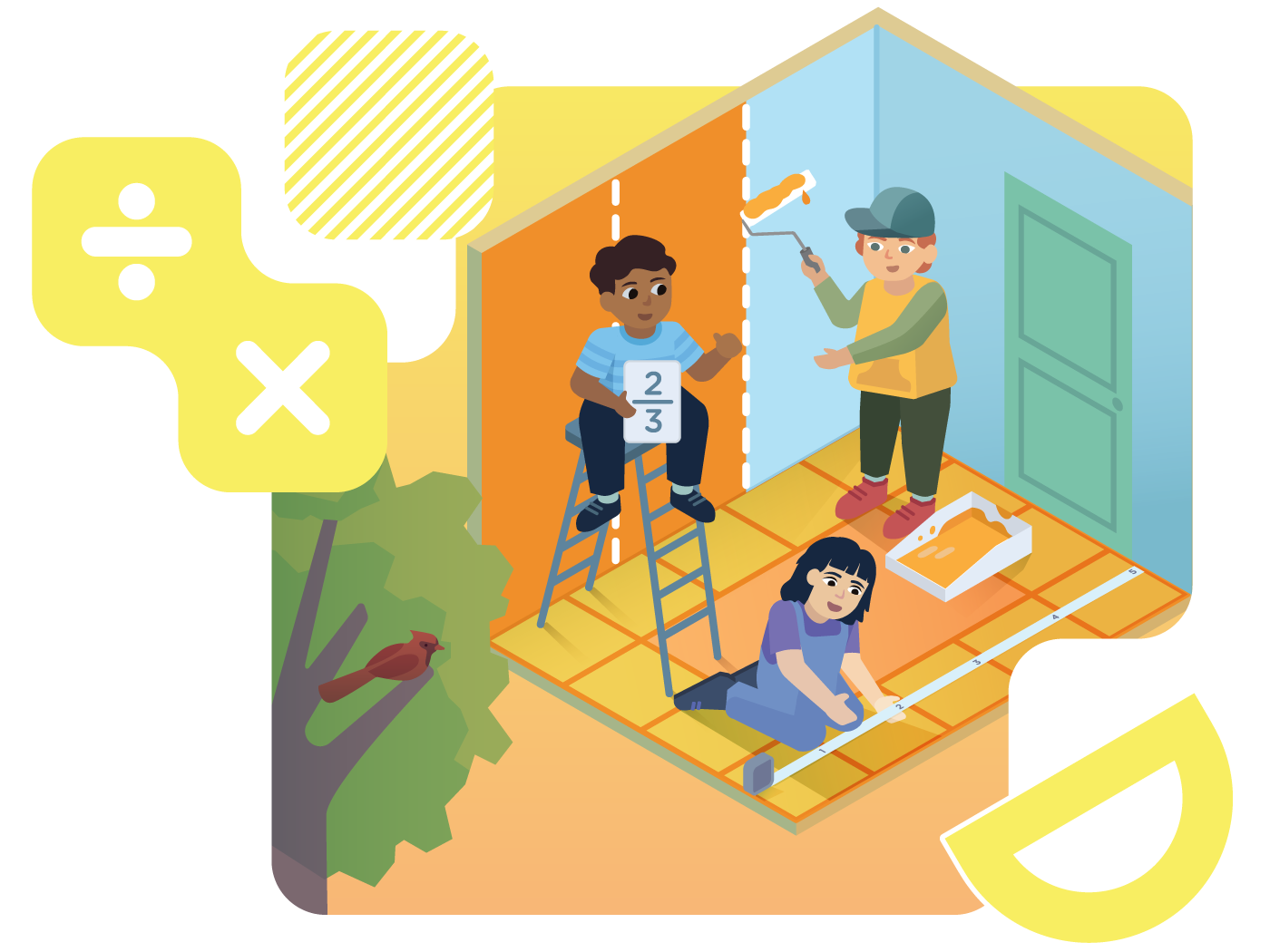
Three children paint the walls of a room; one holds a paper with the fraction 2/3, while math symbols and a tree appear in the background.
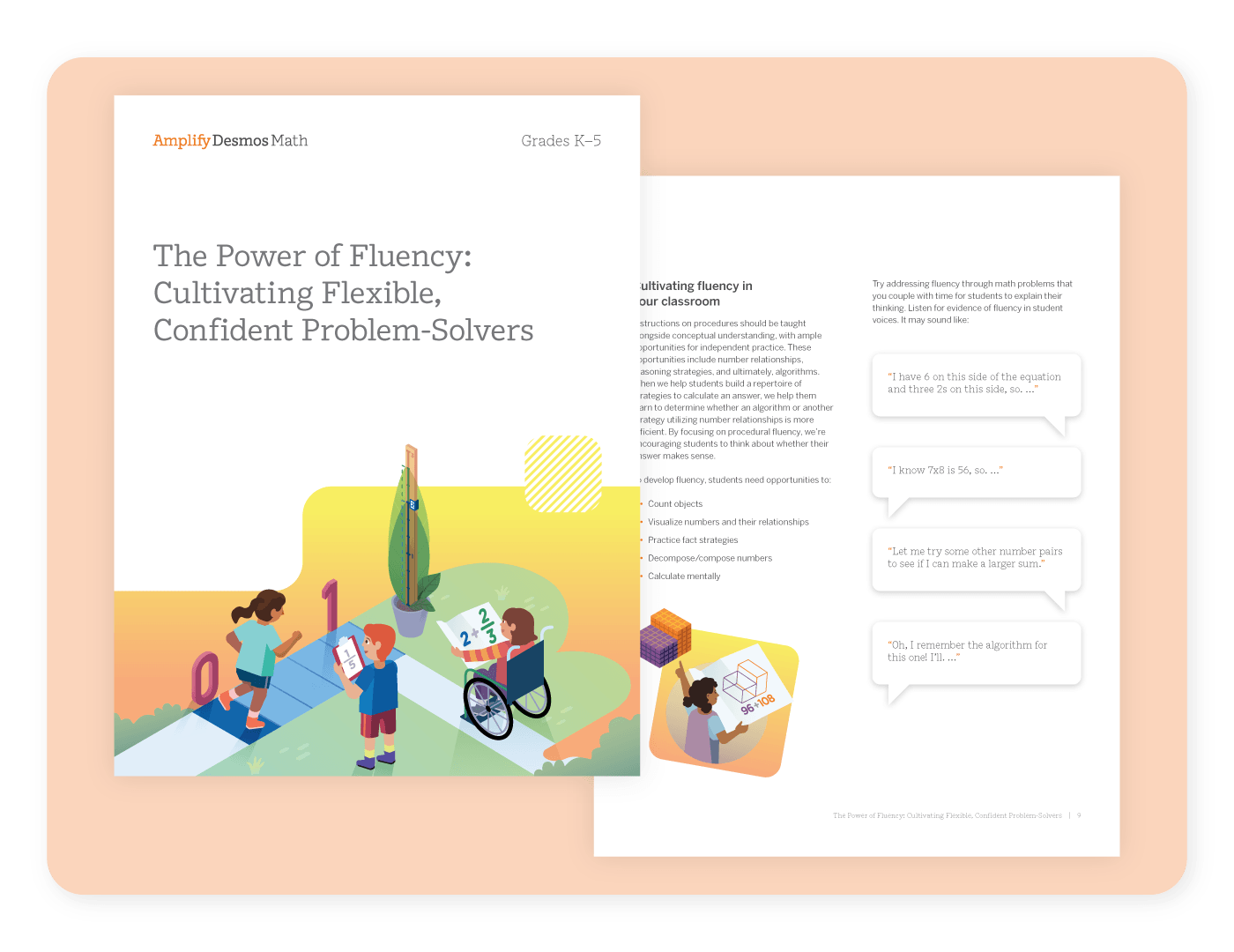
A booklet titled "The Power of Fluency: Cultivating Flexible, Confident Problem-Solvers" with an illustrated cover and an open page showing text and graphics about classroom fluency.

The power of fluency

Teachers work to achieve so many outcomes during their math block. While balancing multiple priorities, it’s important to remember that procedural fluency remains integral to student learning. Access this guide to unpack the power of fluency and find free math fluency practice to use in your next lesson.

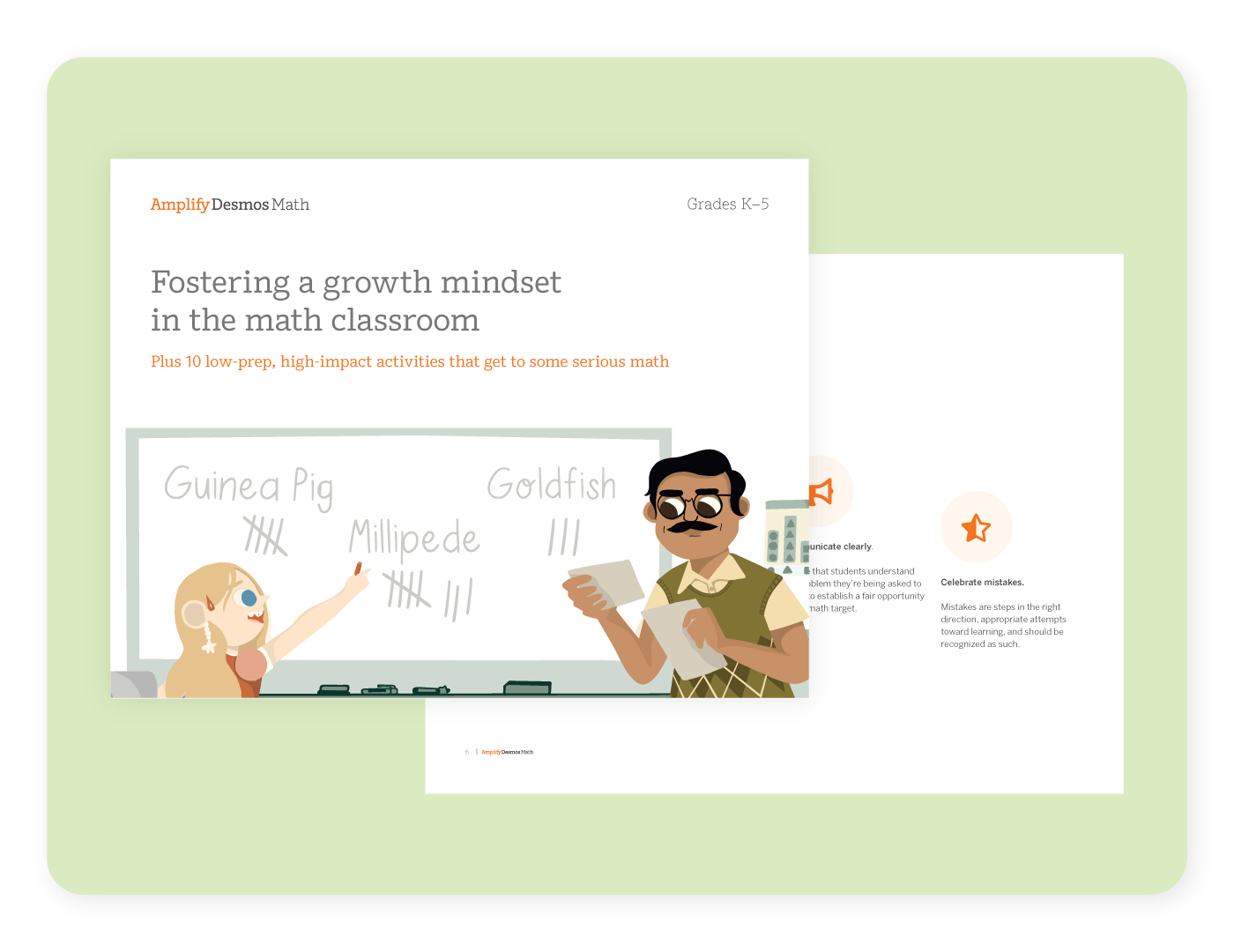
10 low-prep, high-impact math activities that get to some serious math

Envision your classroom engaged in a difficult math task—all students are participating, leveraging different scaffolds that you intentionally prepared ahead of time. Engagement is high, and students are both challenged and motivated. Make this a reality in your school with our free activities designed to encourage productive struggle while reaching all learners.

A teacher holds a clipboard while a student points at a chalkboard labeled "Guinea Pig," "Millipede," and "Goldfish" in a classroom setting.
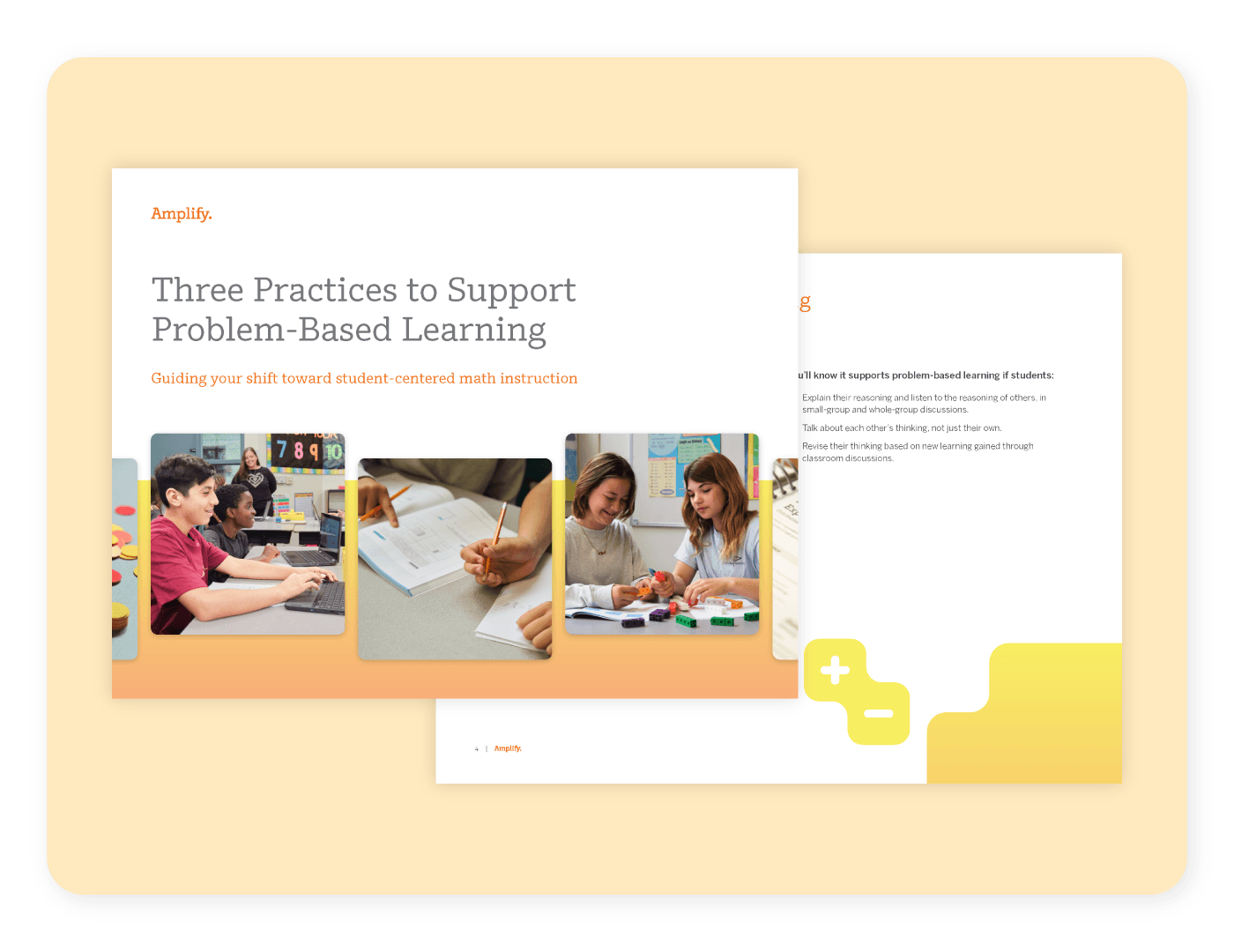
A presentation slide titled "Three Practices to Support Problem-Based Learning" features students and teachers engaged in classroom activities and math instruction.
Three practices to support problem-based learning

As educators, we want all students to develop a rich and deep understanding of the math they experience in our classrooms. A problem-based learning approach supports this by centering problem-solving in ways that build lifelong mathematical proficiency. Read this guide for practical tips on introducing problem-based learning and deeper conceptual understanding into your math classroom.

Best practices from real educators like you

Learn tried and true strategies for leveling up math instruction from Beyond My Years podcast guests like Amplify’s own Dan Meyer, teacher and My Kindergarten Math Workbook author Keri Brown, educator and speaker Mike Flynn, teacher and I Hate Math author Ian Brown, and more!

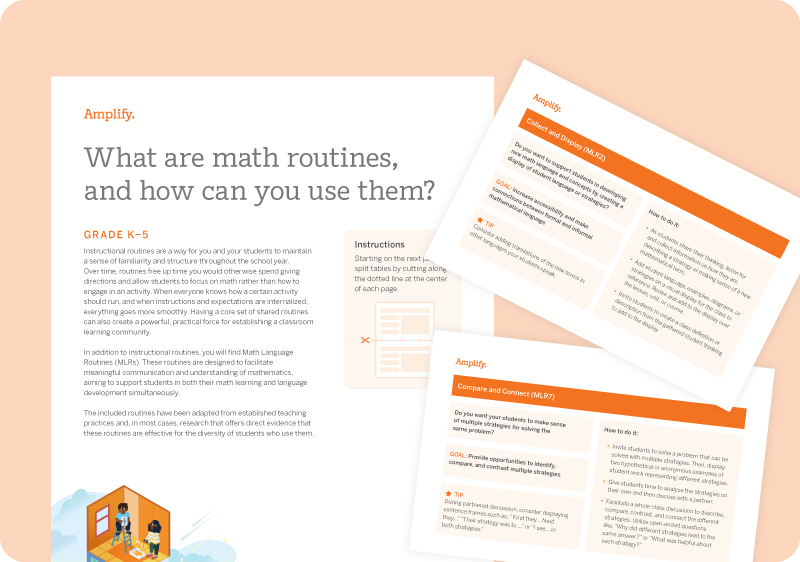
More free resources for K–5 educators

Two children paint a wall while holding a "2/3" sign; another child on the floor holds a "3 x 3" sign near a bookshelf.

K–5 Insider

Sign up for our monthly email to get new K–5 content and activities directly in your inbox.

sign up 

A printed guide titled "What are math routines, and how can you use them?" for grades K–5, with instructions and example math routine cards displayed.

K–5 instructional routine cards

Find easy-to-implement routines to keep students interacting and engaged with a lesson.

Download

A student and a teacher look at a laptop screen and smile in a classroom with colorful posters on the wall.

Math that motivates: Success stories

See how real teachers and students are unlocking new levels of engagement and comprehension, proving that everyone can be a math person.

LEARN MORE 

Ready to make every student a math person?

Connect with a product expert today.

FAQ for K–5 educators

Procedural fluency is the ability to use procedures flexibly, accurately, and efficiently to solve problems. Procedural fluency goes beyond memorization—students develop fluency when they understand number relationships and can choose from multiple strategies based on the numbers involved.

Students who understand why procedures work feel confident tackling challenging problems. When students can choose strategies that make sense to them, rather than relying on rote memorization, they develop agency and see themselves as capable mathematical thinkers.

Understanding how numbers connect helps students develop flexible thinking and multiple solution strategies. Timed tests often prioritize speed over understanding, which can create math anxiety and discourage the productive struggle that deepens learning.

Teachers can achieve this balance by using a predictable routine: warm-ups for fluency practice, a core problem-solving activity during which students explore multiple strategies, and structured discussion to connect different approaches. This structure ensures both skill-building and mathematical discourse happen daily.

Synthesizing learning means bringing the lesson together by highlighting the key mathematical idea that students have just explored. After students share strategies, the teacher helps them make connections between different approaches and names the big takeaway, often through a brief summary or exit ticket.

The Five Practices for Orchestrating Productive Mathematical Discussions are: 1) Anticipating student strategies before the lesson, 2) monitoring student work during the activity, 3) selecting specific students to share, 4) sequencing presentations in a purposeful order, and 5) connecting different strategies to the mathematical goal.

Productive struggle is when students grapple with challenging problems that require genuine thinking, but that remain accessible with appropriate support. It’s essential for deeper understanding, because it compels students to think critically, test strategies, and build perseverance, moving beyond surface-level memorization.

They can celebrate mistakes as learning opportunities and emphasize that understanding develops through effort and persistence. They can also create a safe classroom environment in which all students feel comfortable sharing their developing ideas and foster structured discussions during which multiple strategies are valued, helping students see that there’s more than one right way to think mathematically.

These are problems accessible to all students (that’s the low floor) but open enough to challenge advanced thinkers (that’s the high ceiling). Tasks like these allow multiple entry points and solution strategies, making them ideal for generating rich classroom discussion in which every student can participate meaningfully.

Such routines build number sense and fluency while making discussions predictable and low stakes. These brief, structured activities (5–10 minutes) activate prior knowledge, help students see number relationships, and give everyone practice explaining their thinking—all without requiring extensive preparation or materials.

They can do so by maintaining meaningful objectives while providing varied supports—ensuring that students understand what’s being asked, offering manipulatives and visual tools, allowing partner discussion before whole-class sharing, asking guiding questions without giving away the answer, and strategically grouping students. The goal is supporting access to challenging work, not making it easier.

Math that motivates: Amplify Desmos Math success stories

It’s no secret that student engagement and the prevalence of math anxiety are real problems in math classrooms. Incorporating more problem-based learning can help, but it can feel intimidating and difficult to know where to start. That’s why we’re here!

Amplify Desmos Math is a curiosity-driven K–12 math program that introduces a structured approach to problem-based learning and builds students’ lifelong math proficiency. Teachers help students build off of each other’s ideas and find confidence in their math identities, creating a community of math learners.

But don’t take our word for it—see how real teachers and students are unlocking new levels of engagement and comprehension, proving that everyone can be a math person.

A woman with straight, shoulder-length blonde hair smiles at the camera, wearing a striped sweater and hoop earrings. Shelves with books are visible in the background.
“With Amplify Desmos Math, I’ve noticed a huge shift of engagement because there’s so much interaction. Yes, there is pencil and paper, but there’s so much more. They’re getting immediate feedback and motivation to continue on. So if they don’t get something right the first time, they want to! ”

—Kristi Melick

Sixth-grade teacher, San Diego Unified School District, CA

School spotlight: Decatur Classical Elementary School

See how Amplify Desmos Math is making an impact in Chicago, Illinois, with our latest case study.

Cover page of a PDF titled "Making the shift to more student-centered math instruction," featuring an outline of Illinois and text about Decatur Classical Elementary School.

A structured approach to problem-based learning

Witness teachers and students working together and see how Amplify Desmos Math revolutionizes K–12 math education through a structured approach to problem-based learning that fosters a collaborative math community.

The power of the pause

See what happens when teachers use the pause–one of the teacher facilitation tools and core differentiators in Amplify Desmos Math. You won’t believe how students react!

Everyone’s a math person.

See how Amplify Desmos Math helps every student see themselves as a math person.

What Teachers Say

What educators say about Amplify Desmos Math

Shifting to this problem-based curriculum now is allowing students to open up. I think they’re taking control and ownership. They’re coming up with the strategies, they’re sharing the strategies. It offers an opportunity for the students to look around the classroom to see what their friends are doing. And in turn, if they’re stuck, they’re comfortable turning to other students and problem-solving through sharing.

Joseph Croce

Seaford School District, DE

What educators say about Amplify Desmos Math

When we went district-wide with our Amplify Desmos Math curriculum our teachers became the facilitators of learning. And our students are the doers of mathematics. And what we’ve seen, what I’ve seen in the classroom, is kids are engaged in a problem, they’re collaborative, and they’re having fun. And it’s like they’re not even realizing that they’re really doing math.

Jessica Walsh

San Diego Unified School District, CA

What educators say about Amplify Desmos Math

So many kids have stated, ‘Oh, I’m not a math person.’ Or they’re scared of getting the answer incorrect. And I think with this curriculum, they feel safe.

Brendan Simon

Assistant Principal, San Diego Unified School District, CA

Best practices from real educators like you

Learn tried and true strategies for leveling up math instruction from Beyond My Years podcast guests like Amplify’s own Dan Meyer, teacher and My Kindergarten Math Workbook author Keri Brown, educator and speaker Mike Flynn, teacher and I Hate Math author Ian Brown, and more!

Two women work together at a desk with a laptop and papers; the image appears on the cover of a document titled “Foundational research” for Amplify Desmos Math Grades K–Al.

Program efficacy

Explore the research behind Amplify Desmos Math.

Ready to make the shift to curiosity-driven learning?

Get access to free digital samples today.

Request a sample or demo

Amplify CKLA in Action

Rich, engaging content is at the center of Amplify Core Knowledge Language Arts® (CKLA) curriculum and instruction. Students build subject area knowledge in history, science, literature, and the arts by learning to read and write. High-quality instructional materials built on the Science of Reading simplify your planning and provide the support and resources you need.

Inside the Classroom

Kindergarten

Follow along as a kindergarten class goes through an Amplify CKLA Skills Strand lesson on tricky words. Students review sounds and spellings using Large Letter Cards, engage with Student Readers, and receive explicit instruction from their teacher in both whole- and small-group settings.

Grade 1

In this Amplify CKLA Knowledge Strand lesson, students achieve reading proficiency with complex read-alouds, exposure to background knowledge, vocabulary practice, text-based discussions, and writing activities.

Grade 4

Watch students journey through a Quest for the Core™ in the Amplify CKLA lesson, Eureka! Student Inventor. These fourth-graders work in teams, combining research, writing, and presenting skills to become master inventors.

Spotlights

Knowledge at the center
When you put knowledge at the center of learning, an amazing thing happens: students get motivated and curious for more. They learn to read, and they learn to love reading.

Foundational skills to accelerate fluency
Watch students receive targeted, explicit instruction on sounds, spellings, and word automaticity in lessons designed to teach phonological awareness, decoding, and more.

Making teachers’ lives easier with high-quality instructional materials
Hear a teacher’s account of how Amplify CKLA gives teachers all the tools and support they need no matter how much experience they have.

Student engagement
Watch how much students enjoy learning about the latest topic and how eager they are to join classroom discussions. Teachers can see the increased engagement and the program’s results.

Testimonials

“I would highly recommend this program to any school … you see the confidence it builds within kids. It meets the needs of the socioeconomically disadvantaged kids, it meets the needs of EL kids. It meets the needs of all kids.”

Mike Iribarren
Principal, Alvina Elementary School, California

Testimonials

“[It] brought the joy back to teaching for me.”

Courtney Austin
Grade 5 Teacher, Bryant Elementary, California

Testimonials

“High-quality content matters to teachers, to kids, and to our collective future.”

EdReports

Request a sample

Ready to take a closer look at Amplify CKLA? Complete our form to request a sample!

Inside the Classroom

Kindergarten

Follow along as a kindergarten class goes through an Amplify CKLA Skills Strand lesson on tricky words. Students review sounds and spellings using Large Letter Cards, engage with Student Readers, and receive explicit instruction from their teacher in both whole- and small-group settings.

Grade 1

In this Amplify CKLA Knowledge Strand lesson, students achieve reading proficiency with complex read-alouds, exposure to background knowledge, vocabulary practice, text-based discussions, and writing activities. 


Grade 1

In this Amplify CKLA Knowledge Strand lesson, students achieve reading proficiency with complex read-alouds, exposure to background knowledge, vocabulary practice, text-based discussions, and writing activities.

Grade 4

Watch students journey through a Quest for the Core™ in the Amplify CKLA lesson, Eureka! Student Inventor. These fourth-graders work in teams, combining research, writing, and presenting skills to become master inventors.

Spotlights

Knowledge at the center
When you put knowledge at the center of learning, an amazing thing happens: students get motivated and curious for more. They learn to read, and they learn to love reading.


Foundational skills to accelerate fluency
Watch students receive targeted, explicit instruction on sounds, spellings, and word automaticity in lessons designed to teach phonological awareness, decoding, and more.


Making teachers’ lives easier with high-quality instructional materials
Hear a teacher’s account of how Amplify CKLA gives teachers all the tools and support they need no matter how much experience they have.


Student engagement
Watch how much students enjoy learning about the latest topic and how eager they are to join classroom discussions. Teachers can see the increased engagement and the program’s results.


“I would highly recommend this program to any school … you see the confidence it builds within kids. It meets the needs of the socioeconomically disadvantaged kids, it meets the needs of EL kids. It meets the needs of all kids.”

Mike Iribarren

Principal Alvina Elementary School, California

“[It] brought the joy back to teaching for me.”

Courtney Austin

Grade 5 Teacher Bryant Elementary, California

“High-quality content matters to teachers, to kids, and to our collective future.”

EdReports

Request a sample

Ready to take a closer look at Amplify CKLA? Complete our form to request a sample!


Desmos Math 6–A1 is available now for Texas classrooms!

Brought to you by the team behind Desmos Classroom activities, Desmos Math 6–A1 is available for grades 6–8 now, with Algebra 1 units rolling out over the course of the 2022–2023 school year.

Illustration of two students hiking and looking at a map, with a texas-shaped logo and text stating "aligned to the TEKS!" in a Desmos Math speech bubble.

What’s Desmos Math
6–A1?

Laptop screen displaying an illustrative mathematics pattern on a grid in a graphics editing software interface, with annotations and tool icons visible.

TEKS-aligned lessons that help students express their brilliance every day

Every student is brilliant, but not every student feels brilliant in math class. We designed our program to put students’ ideas at its center. Our lessons pose problems that invite a variety of approaches, and our technology helps teachers celebrate and develop all of that interesting thinking in their classrooms.

A blend of paper and technology meets the needs of Texas classrooms

Leveraging our expertise in technology, pedagogy, and design, we based Desmos Math 6–A1 on the top-rated programs from Illustrative Mathematics® and Open Up Resources to create dynamic and interactive digital learning experiences, offered alongside flexible and creative print activities.

Tablet displaying a colorful sketch of a beach with waves and shells, next to illustrative mathematics worksheets and a pen, on an educational website.
Computer screen displaying a colorful educational program for teaching operations with polynomials, featuring various interactive modules and Illustrative Mathematics exercises.

Powerful facilitation tools for teachers

Our student-centered lessons empower students to explore new ideas, and our teacher dashboard helps teachers bridge those ideas together. Whether teachers are observing student learning on our lesson summary page or guiding productive discussions with our conversation toolkit, our facilitation tools make teaching more effective and more fun.

Built-in resources support Texas teachers and students

Desmos Math 6–A1 provides powerful resources teachers need to prepare their students for STAAR and beyond. Better yet, students are provided with an opportunity to practice with the same tools they’ll use on the STAAR exam!

Illustration showing "Texas resources" including a cowboy hat and boots, surrounded by icons for illustrative mathematics, STAAR review, templates, and coaching guides.
Screenshot of an educational webpage section titled "Dinopops: Graphs of Proportional Relationships," highlighting Common Core standards and learning goals, with an arrow pointing to standards. This section is part

TEKS objectives are identified for each lesson at point of use

Both ‘Addressing’ and ‘Building Towards’ TEKS are identified making it easy for teachers to see exactly what students are learning and what is ahead.

What are people saying?

“I have been a teacher for 23 years and this is the most engaged I have seen students in a mathematics classroom.”

Rebecca Moore

Math Coach, Naugatuck, CT

What are people saying?

“If you’re teaching math and not utilizing Desmos, you may as well be climbing a mountain with your hands tied behind your back.”

Mike Del Greco

Math Teacher, Sudbury, MA

What are people saying?

“Every lesson that I preview, I fall in love a little more ❤ thank you for this work and thank you for reflecting and listening to the feedback!”

Jenny Ainslie

Secondary Math Facilitator, Orange County, NC

Try a warm-up activity from Desmos Math 6-A1

Students’ ideas are the engine of our lessons. Their sketches power simulations and their mathematical thinking powers classroom conversations. In this lesson about functions, teachers help students make connections between scenarios and the graphs that represent them. Interact with a warm-up activity below!

Want to learn more?

Request more information

Contact us

What are the results?

We surveyed 70 teachers and 1,500 students who piloted our program, asking them to compare it to their prior program. Here’s what they shared with us…

Map of the USA with marked locations across all states, illustrated in a clear vector style with blue pins and a multicolored background inspired by illustrative mathematics.
DM6-A1_CurriculumMigration_Chart-StudentsLearn-Update

Students learn more math

We design student-centered lessons that promote mathematical curiosity and student engagement, building on the coherence and rigor of the Illustrative Mathematics program. Each unit includes student notes, skill practices, and rich assessments to help students show what they know and can do.

The result: Students and teachers in the pilot both said that students learned more with Desmos Math 6–A1 than with their prior program.

Students enjoy math more

We help students experience the need for new mathematical ideas, and our interactive feedback shows them the value of their own thinking.

The result: Teachers in the pilot said their students were more engaged using Desmos Math 6–A1 than in their prior program, and students reported enjoying math class more.

DM6-A1_CurriculumMigration_Chart-StudentsEnjoy-Update
DM6-A1_CurriculumMigration_Chart

Teachers enjoy teaching more

We pair your entire teaching team with a dedicated coach who will support your team’s onboarding and instruction throughout the year. Additionally, we offer just-in-time lesson preview emails, unit overview webinars, and other supports to help your team succeed.

The result: Teachers in the pilot felt better supported with Desmos Math 6–A1 than with their prior program.

Questions?

Please reach out to
texas@amplify.com

Contact us

TEA announces additional innovative learning solutions for K-12 English and Spanish and K-5 science to support schools across Texas

AUSTIN, Texas—October 5, 2020—The Texas Education Agency today announced the next set of instructional materials—covering K-12 English Language Arts and Reading (ELAR), K-5 Spanish Language Arts and Reading (SLAR), and K-5 Science—that will be made available to school systems through the Texas Home Learning 3.0 (THL 3.0) initiative. Like other THL 3.0 offerings, these instructional materials are optional, digitized, customized for Texas, and aligned to Texas Essential Knowledge and Skills (TEKS)—the state standards for what students should know and be able to do.

TEA has partnered with Amplify for K-8 ELAR and K-5 SLAR, Odell Education for 9-12 ELAR, and Great Minds for K-5 Science to develop and deliver this next set of high-quality resources including TEKS-aligned unit and lesson plans. Additional materials will be released on a continuous basis. Before release, all THL 3.0 instructional materials undergo a rigorous review that includes Texas teacher feedback to confirm alignment with TEKS and quality standards. Additional THL 3.0 instructional materials for other subjects and grade levels will be announced over the coming weeks.

“As the pandemic continues to disrupt public education across our state, TEA is committed to supporting schools with effective distance learning resources,” said Texas Education Commissioner Mike Morath.

Amplify’s K-5 Texas Elementary Literacy Program for ELAR and SLAR and 6-8 Amplify ELAR Texas are TEKS-aligned language arts curriculum designed to support Texas learners in the classroom, at home, or wherever learning takes place. Built on the science of teaching reading, the K-5 Amplify Texas Elementary Literacy Program combines foundational skills with content knowledge—so that learning to read and reading to learn develop together. The 6-8 Amplify ELAR Texas program is a TEKS-aligned, blended language arts curriculum that places text at the center of every lesson. Designed specifically for Texas middle schools, this flexible program supports digital, print, and hybrid classrooms.

“We are thrilled to partner with TEA to provide Texas teachers and students with the highest quality reading and language arts programs that align to TEKS standards,” said Larry Berger, chief executive officer of Amplify. “Amplify’s flexible core and supplemental materials will support Texas educators and students whether learning is happening at home, in school, or some of each.”

Odell Education’s Texas High School Literacy Program, which covers 9-12 ELAR, is an innovative program created specifically for Texas high school students and educators. It is designed to support seamless learning in a variety of contexts. The program empowers teachers and students through dynamic activities centered on rich texts and topics as they develop TEKS-aligned literacy skills, habits, and knowledge.

“We are thrilled to partner with Texas educators to develop an exciting new literacy program for the high school students in Texas,” says Odell Education CEO Judson Odell. “Thanks to the tremendous commitment of the Texas Education Agency, Texas high schoolers will have a flexible program for this year and beyond that fosters the literacy they need to thrive wherever their path may lead them.”

Great Minds’ K-5 PhD Science TEKS Edition is a phenomenon-based program in which teachers facilitate the learning, but students own it. In every module, students explore authentic phenomena to build an enduring understanding of core science concepts through hands-on investigations and evidence-based learning. And now it is being adapted to align with the TEKS and, in partnership with TEA through its Texas Home Learning initiative, will be available as an open education resource for all schools and districts in the state.

“Science education should start early, and it should be comprehensive,” says Pam Goodner, Great Minds Chief Academic Officer for Science. “Texas recognizes that students need coherent instruction that builds knowledge from lesson to lesson to develop deep scientific understanding. PhD Science TEKS Edition will deliver what the state is seeking to help students act as scientists to observe, model, investigate, and understand the world around them.”

THL 3.0 is a comprehensive initiative to support school systems, teachers, parents, and students during the public health crisis and beyond with high-quality instructional materials, technology solutions, and professional development resources. TEA previously announced that it will offer all Texas school systems a world-class Learning Management System (LMS) from PowerSchool’s Schoology for two years at no cost. Nearly 400 Texas school systems have already signed up, with another 200 currently engaging with the Schoology team.

For more information on Texas Home Learning 3.0, please click here.

The Texas Education Agency news release is available here.